



Pureleven journal
Cooking & Spices
From Kerala soil to your kitchen.
Pureleven spice journal
Which Spices to Buy Locally and Which to Order From the Source
Answer-first guidance with a faster path to farm-origin Kerala products you can buy today.
Quick Summary
Where to buy good spices depends on the spice. A spice-by-spice guide to what's fine from your local shop and what's worth ordering from where it's grown.
Jump through the guide
Go straight to the sections that answer the buying, comparison, or sourcing question you came for.
Where to buy good spices depends on the spice. Everyday seeds and powders that are grown widely and sell fast, like cumin, mustard and coriander, are usually fine from a busy local shop. Expensive whole spices that lose their smell quietly on a shelf, like cardamom, black pepper and cloves, are worth ordering from the region where they're grown.
That's the short version. Below is the spice-by-spice list we'd give a friend setting up a new kitchen.
Why does it matter where you buy each spice?
Every spice fades after harvest, but not at the same speed and not in a way you can always see. Some spices look the same for a year while their smell drains away. Others are cheap and move so fast through shops that they rarely get the chance to go stale.
So the useful question isn't "local or online?" It's "how much do I lose if this one is old, and can I tell by looking?"
Spice by spice: buy locally or order from the source?
| Spice | Our suggestion | Why |
|---|---|---|
| Cumin (jeera) | Buy locally | Grown widely and sells fast. Easy to judge by smell in the shop. |
| Mustard seeds (kaduku) | Buy locally | Cheap, sturdy and keeps well whole. |
| Coriander seeds | Buy locally | High turnover. Buy small amounts and roast at home. |
| Fenugreek (uluva, methi) | Buy locally | Keeps well. Quality is fairly consistent. |
| Chilli powder | Buy locally, from a shop you trust | Depends on the variety you like. A trusted mill or shop matters more than distance. |
| Cardamom (elakka) | Order from the source | Expensive, and old pods still look green. Grade and freshness make a big difference. |
| Black pepper (kurumulak) | Order from the source | Easy to mix with light, hollow or older corns that look similar in a jar. |
| White pepper | Order from the source | Not stocked everywhere, and quality varies a lot. |
| Cloves (grampoo) | Order from the source | Good cloves are oily and whole. Older stock gets dry and broken. |
| Cinnamon (dalchini) | Either, if you know which type you're getting | Most shops sell cassia. If you want Ceylon cinnamon, you'll usually need to look for it. |
What should you happily buy near home?
The seeds that go into tadka and tempering. Cumin, mustard, fenugreek, fennel, coriander. These are grown in many parts of India, sell in huge quantities, and a busy kirana refills them often.
What to look for when you buy them locally:
- A shop where the jars or sacks clearly get refilled. Dusty packets at the back are a bad sign.
- Whole seeds rather than powders. You can dry-roast and grind them in minutes.
- Seeds that smell when you rub a few between your palms.
Which spices are worth ordering from where they're grown?
Cardamom
This is the big one. Cardamom is costly, it's sorted into grades by size and colour, and its smell fades long before its colour does. From a shop shelf you usually can't tell the grade, the harvest or how long it's been sitting. Our post on cardamom grades explains what those size labels mean.
Black and white pepper
Pepper from the Idukki hills grows on vines climbing the shade trees in cardamom plantations. Good corns are dark, heavy and properly hot. In a mixed jar, lighter and older corns are hard to spot. Ordering from a grower means you know which harvest region you're getting.
Cloves
Fresh cloves leave oil on your fingernail when pressed. Around Adimali in Idukki, clove buds are hand-picked before they open. Once cloves have been sitting too long, they turn dry and the heads break off. You'd want a seller who can tell you where the cloves came from.
What about spices somewhere in between?
Some spices sit in the middle. Cinnamon is a good example. Most local shops sell cassia, and that's fine for biryani and garam masala. But if a recipe calls for Ceylon cinnamon, or you want to use it daily, you'll need to buy it deliberately and know which one you're getting.
Star anise is another. It's usually imported into India, so "local" doesn't mean much here. What matters is buying whole, star-shaped pods from a seller who can confirm it's Chinese star anise (Illicium verum), the culinary kind.
For the bigger picture on shops, delivery apps and ordering direct, see our main guide on spices near me versus ordering online.
Where we fit in
We're a small family business in Rajakumari, Idukki, and we only sell the spices that make sense to order from the source. Cardamom, pepper and cloves come from Idukki farms, packed whole with nothing added. If you're trying a few for the first time, the clove, pepper and cardamom combo is an easy start, or go straight for Adimali cloves.
Frequently asked questions
Where can I buy good quality spices?
For everyday seeds like cumin and mustard, a busy local shop with fast turnover is a good source. For cardamom, black pepper and cloves, buy whole from a seller in the growing region who can tell you the district and harvest season. Wherever you buy, smell the spice first or as soon as it arrives.
Is it cheaper to buy spices locally?
For common seeds and powders, usually yes, and the quality difference is small. For high-value spices like cardamom, a lower price often means a lower grade or older stock. Compare what you're actually getting, not the price per packet alone.
Should I buy whole or ground spices?
Whole, wherever you can. Ground spices lose their smell much faster, and it's harder to tell what's in a powder. A small mixie jar is enough to grind what you need each week.
Start with the one spice you care most about, buy it well, and taste the difference in your next cup of chai.
Ready to buy?
Related products for this article
Move from reading intent to shopping intent with product cards tied to this topic and a direct route into the wider catalog.
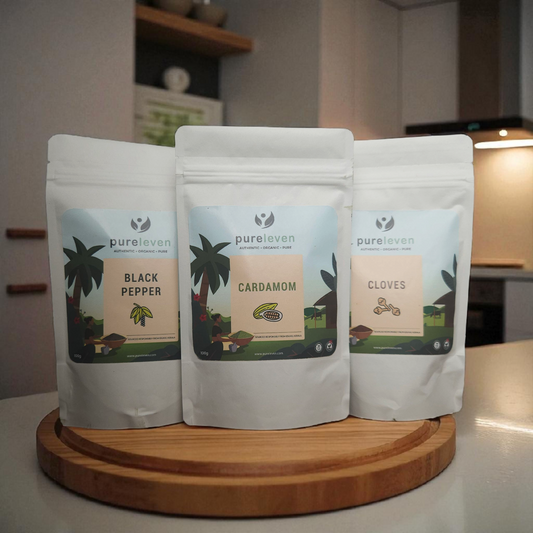 Primary pick3-in-1 Kerala Spice ComboStart with a best-selling Pureleven product picked to match the buying intent behind this article.Rs. 909.00Rs. 559.00
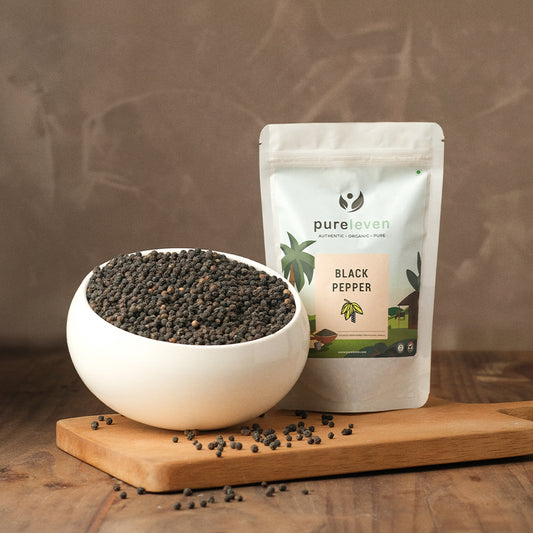 Also considerKerala Black Pepper (Kali Mirch) – Bold Whole Peppercorns from IdukkiRs. 100.00
 Kitchen add-onExtra Bold Kerala Cardamom (Elaichi) – 8mm Whole Pods from IdukkiRs. 309.00Rs. 270.00


