



Pureleven journal
Cooking & Spices
From Kerala soil to your kitchen.
Pureleven spice journal
Spice Certifications in India: AGMARK, GI, Spices Board and Organic
Answer-first guidance with a faster path to farm-origin Kerala products you can buy today.
Quick Summary
What AGMARK, GI tags, Spices Board registration and organic marks (NPOP, PGS-India, Jaivik Bharat) actually tell you about a spice, and what they don't.
Jump through the guide
Go straight to the sections that answer the buying, comparison, or sourcing question you came for.
The main spice certification marks in India are AGMARK (a government quality grade), GI tags (protected regional names), Spices Board registration (mostly for exporters and cardamom dealers) and organic certification under NPOP or PGS-India, shown with FSSAI's Jaivik Bharat logo. Each one answers a different question, and none of them tells you everything about a spice. Knowing what each mark actually covers helps you read a pack properly.
Below is a plain guide to each, and what to ask when a seller mentions one. It's one part of the bigger question of what makes a spice authentic.
Spice certification in India at a glance
| Mark | Who runs it | What it tells you | What it doesn't tell you |
|---|---|---|---|
| AGMARK | Directorate of Marketing and Inspection, Ministry of Agriculture | The product was graded against a government quality standard | Which farm or district it came from |
| GI tag | Geographical Indications Registry | The name is legally tied to a defined region and its qualities | That a given pack is actually authorised to use the name |
| Spices Board registration | Spices Board, Ministry of Commerce | The business is registered to export spices, or licensed to deal in cardamom | Anything about the quality of a retail pack sold in India |
| India Organic (NPOP) | APEDA, Ministry of Commerce, through accredited certification bodies | The farm and handling were inspected against organic standards | Freshness, grade or flavour |
| PGS-India Organic | Ministry of Agriculture, through local farmer groups | A group of farmers checked each other's organic practice | It's meant mainly for the domestic market, not export |
| Jaivik Bharat | FSSAI | The food is sold as certified organic under Indian food law | How the spice tastes or when it was harvested |
What is AGMARK and does it matter for spices?
AGMARK comes from the Agricultural Produce (Grading and Marking) Act of 1937. The Directorate of Marketing and Inspection sets grade standards for a long list of farm products, spices included, and packers can apply to grade their produce against them.
It's voluntary. An AGMARK label tells you the product was checked against a standard for things like moisture, extraneous matter and quality. That's useful, but it's a grade, not a statement of origin. You'll see it more often on ground spices and blends than on small-farm whole spices.
What does a GI tag mean on a spice?
A Geographical Indication protects a name that belongs to a place. Kerala spice GIs include Alleppey Green Cardamom and Malabar pepper (both registered around 2007 to 2008, with the Spices Board as applicant) and, more recently, Thalanad cloves from Kottayam district.
Two things worth knowing. First, GI areas can be wide. Alleppey Green Cardamom covers growing areas in southern Kerala and parts of Tamil Nadu, and it's named after the old trading port rather than a farm district. Second, the GI protects the name. It's still worth asking whether the seller is an authorised user and where exactly the spice was grown.
What does the Spices Board actually certify?
The Spices Board was set up in 1987 under the Spices Board Act, 1986, and is headquartered in Kochi. It promotes exports of the spices in its schedule and looks after cardamom development.
For buyers, the two things to know are:
- Exporters need a Certificate of Registration as Exporter of Spices (CRES). That's a registration for export, not a quality mark on a pack you buy in India.
- Cardamom is sold through e-auctions run by the Board at Puttady in Idukki and Bodinayakanur in Tamil Nadu, and dealers need a licence to take part.
How does organic certification work in India?
NPOP and the India Organic logo
The National Programme for Organic Production is run by APEDA under the Ministry of Commerce. Farms and processors are inspected by accredited certification bodies. NPOP standards are recognised by the European Commission and Switzerland as equivalent for unprocessed plant products, which is why most certified organic exports use it.
PGS-India
The Participatory Guarantee System is run under the Ministry of Agriculture. Instead of a third-party inspector, local groups of farmers check each other's practice. It's cheaper and suits small farms selling within India.
The Jaivik Bharat logo
Under FSSAI's Organic Foods Regulations, 2017, organic food sold in India must be certified under NPOP or PGS-India. FSSAI's guidance says a genuine organic pack should carry the Jaivik Bharat logo, an FSSAI licence number, and either the India Organic or PGS-India Organic logo.
There's one exemption. Very small producers selling directly to consumers (with an annual turnover up to ₹12 lakh, per FSSAI's FAQ) don't have to be certified. That's fair to tiny farms, but it also means an "organic" claim from a small seller may not be certified at all. Ask which system, if any, backs the claim.
Is Pure Leven organic certified?
No. We're not certified under NPOP or PGS-India, so we don't call our spices organic. What we can tell you is where they come from. We're in Rajakumari, Idukki. Our cardamom and pepper come from farms around Idukki, and our cloves from around Adimali in the same district. Everything is packed whole with nothing added.
If you want to know how a particular spice was grown, ask us on WhatsApp and we'll tell you plainly. Our Kerala spice combo is an easy way to try cardamom, pepper and cloves together, and our guide to buying Kerala spices online covers the other checks worth doing.
Frequently asked questions
Is AGMARK compulsory for spices?
No, AGMARK grading is voluntary for most products. Many good spices are sold without it, especially whole spices from small farms. Its presence tells you a product met a grade standard, not where it was grown.
How can I check an organic spice claim?
Look for the Jaivik Bharat logo plus either the India Organic or PGS-India Organic logo on the pack. If a seller says "organic" without any of these, ask which certification backs it. A tiny producer may be exempt, but they should say so plainly.
Does Spices Board registration mean a spice is good quality?
Not by itself. Spices Board registration is mainly about exporting and cardamom dealing. It doesn't grade the retail pack you buy.
If a certification on a pack confuses you, send us a photo on WhatsApp at +91 88482 65849 and we'll tell you what it means.
Sources
Ready to buy?
Related products for this article
Move from reading intent to shopping intent with product cards tied to this topic and a direct route into the wider catalog.
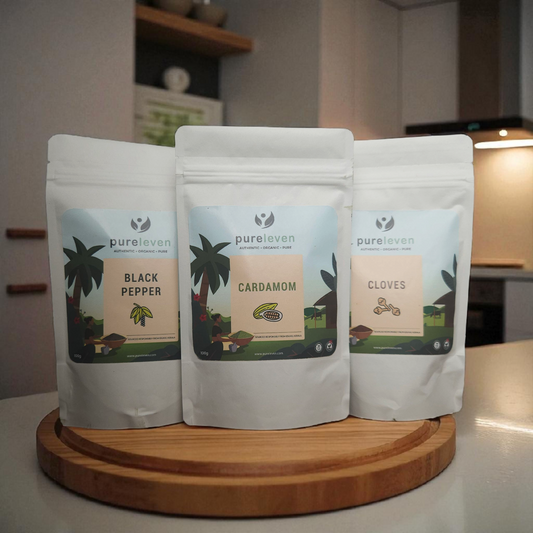 Primary pick3-in-1 Kerala Spice ComboStart with a best-selling Pureleven product picked to match the buying intent behind this article.Rs. 909.00Rs. 559.00
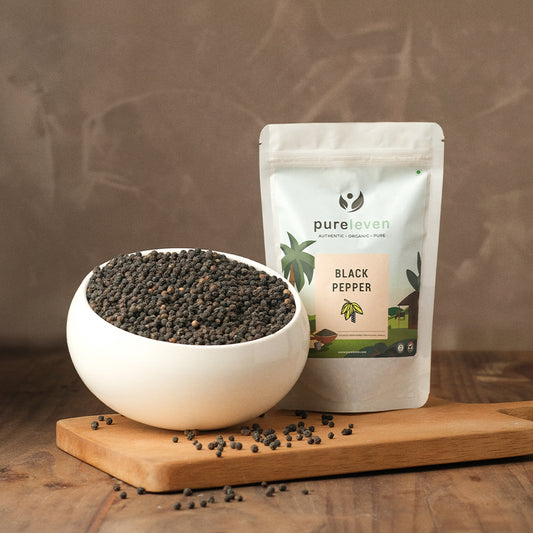 Also considerKerala Black Pepper (Kali Mirch) – Bold Whole Peppercorns from IdukkiRs. 100.00
 Kitchen add-onExtra Bold Kerala Cardamom (Elaichi) – 8mm Whole Pods from IdukkiRs. 309.00Rs. 270.00


