



Pureleven journal
Cooking & Spices
From Kerala soil to your kitchen.
Everyday kitchen guide
Raw Honey vs Processed Honey: What Changes
This article now carries a direct path into Pureleven kitchen best sellers so reading intent can convert without friction.
Quick Summary
What 'raw' and 'processed' honey actually mean, how heating and fine filtering change taste and texture, and what to look for on the label.
Jump through the guide
Go straight to the sections that answer the buying, comparison, or sourcing question you came for.
Raw honey usually means honey that has only been strained, without heating beyond what's needed to let it flow. Processed honey is typically heated and finely filtered so it looks clear and stays runny longer. The difference shows up in texture, crystallisation and flavour, but neither word on a label is a guarantee of quality by itself.
What does "raw" mean on a honey label?
There's no single official definition. The international Codex standard for honey, which many national rules draw on, has no "raw" category. It does say honey shouldn't be heated or processed so much that its composition changes or its quality is harmed.
So "raw" is a seller's description. In practice it usually means the honey was taken from the comb, passed through a coarse strainer to remove wax and bits of bee, and packed. Some pollen and tiny wax particles stay in.
What does processing usually involve?
- Heating, to make honey runny enough to pump and pack quickly, and to delay crystallisation.
- Fine filtering under pressure, which removes most pollen and gives a glass-clear look. Codex says honey filtered this way should be called "filtered honey".
- Blending honey from many sources so every jar looks and tastes the same.
None of this makes processed honey unsafe. It's still honey. It just changes the character.
What heat changes
Heat speeds up the formation of a compound called HMF and lowers the activity of natural enzymes such as diastase. That's why honey standards use HMF and diastase as quality checks: high HMF or low enzyme activity points to honey that's been overheated or stored hot for a long time.
Gentle warming, like standing a jar in warm water to melt crystals, is a different thing from industrial heating and is fine at home.
Raw and processed honey side by side
| Usually raw | Usually processed | |
|---|---|---|
| Look | Can be slightly cloudy | Very clear |
| Texture over time | Often thickens or crystallises | Stays runny longer |
| Taste | Varies with flowers and season | Uniform, milder |
| Batch to batch | Can differ | Consistent |
Is raw honey healthier?
You'll see big promises about raw honey online, and the evidence for most of them is thin. Many people prefer less-processed honey for its flavour and texture, which is a fair reason. But any honey is mostly sugar, so it's something to enjoy in sensible amounts.
One rule applies to all honey, raw or processed: don't give it to babies under 12 months, because of the risk of infant botulism.
Common mistakes when choosing honey
- Treating "never crystallises" as a sign of purity. Most natural honey crystallises in time. Staying liquid for years often just means it was heated or is a type that sets slowly.
- Trusting kitchen purity tests. The water, flame and thumb tests don't prove much. Our honey purity test guide explains what they can and can't show.
- Judging by colour. Dark and light honeys come from different flowers. Colour alone says nothing about processing.
Questions worth asking a seller
- Where does the honey come from, and who keeps the bees?
- Is it heated before packing, and to roughly what temperature?
- How is it filtered: coarse strainer or fine filter?
- Is it from one area and season, or blended?
For more on how honey gets from hive to jar, read how local honey is made.
Our Naadan honey comes from beekeepers around Adimali in Idukki. If you'd like to know how a batch was handled, ask us on WhatsApp at +91 88482 65849.
Sources
Ready to buy?
Related products for this article
Move from reading intent to shopping intent with product cards tied to this topic and a direct route into the wider catalog.
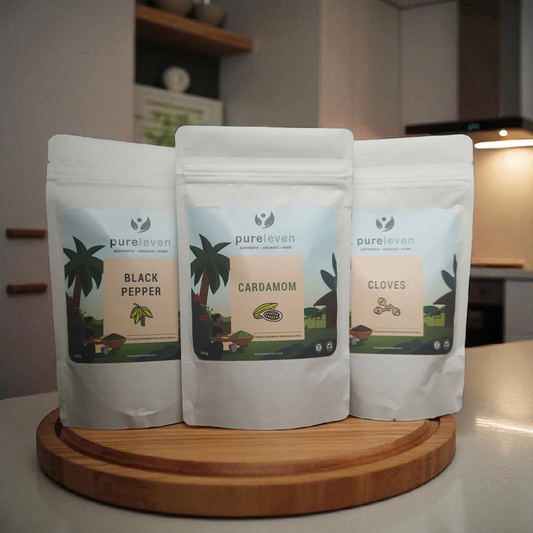 Primary pick3-in-1 Kerala Spice ComboPair this guide with Pureleven best sellers for everyday kitchen buying, gifting, and repeat kitchen use.Rs. 909.00Rs. 559.00
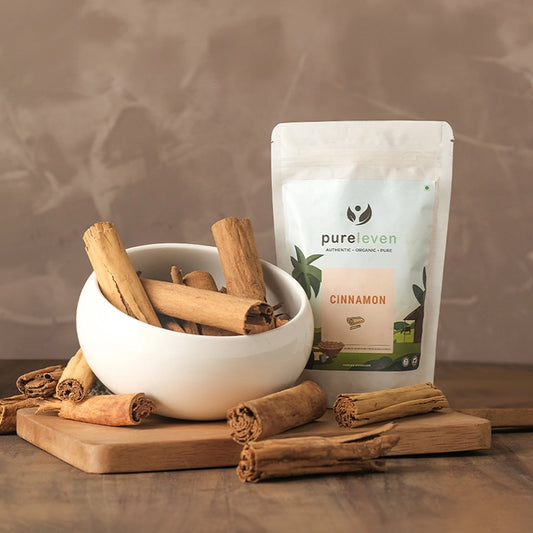 Also considerTrue Ceylon Cinnamon (Dalchini) – Whole Quills from Sri LankaRs. 250.00Rs. 190.00
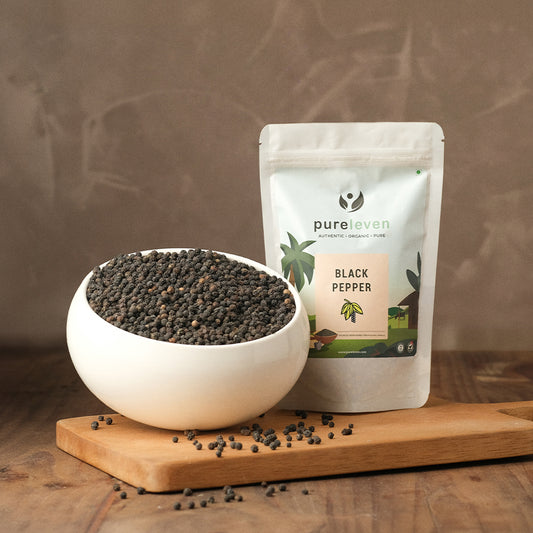 Kitchen add-onKerala Black Pepper (Kali Mirch) – Bold Whole Peppercorns from IdukkiRs. 100.00


