



Pureleven journal
Cooking & Spices
From Kerala soil to your kitchen.
Cinnamon buying guide
How Ceylon Cinnamon Quills Are Made
Compare daily-use cinnamon options and move directly into a product shortlist without leaving the article cold.
Quick Summary
How Ceylon cinnamon is made by hand: cutting young shoots, scraping, brass-rod rubbing, peeling the inner bark, layering quills and shade drying.
Jump through the guide
Go straight to the sections that answer the buying, comparison, or sourcing question you came for.
Ceylon cinnamon is made by hand from the inner bark of young Cinnamomum verum shoots. Workers cut the shoots, scrape off the rough outer bark, rub the stem with a brass rod to loosen the soft inner layer, then peel it off in long strips. Those strips are layered inside one another to form a quill, rested for a day and dried indoors for about four to seven days before being cut to length.
That's the short answer to how Ceylon cinnamon is made. The longer answer explains why a thin, many-layered stick costs what it does, and why cassia looks so different.
Where does the bark come from?
Ceylon cinnamon doesn't come from big old trees. Growers keep the plants cut low, like a bush, so that the roots keep sending up new straight shoots. It's these young shoots that get harvested.
According to Sri Lanka's Export Development Board, the first harvest usually comes about three years after planting. After that, shoots are cut roughly twice a year, after the monsoon rains, when the bark comes away from the wood more easily. The stems chosen are only about 3 to 5 cm thick.
How Ceylon cinnamon is made, step by step
- Cutting the shoots. Mature shoots are cut near the base and the leaves are stripped off. Peeling has to happen the same day, while the bark is still moist.
- Scraping the outer bark. The rough, greyish-brown outer skin is scraped away with a small curved knife. What's left is the pale, soft inner bark underneath.
- Rubbing with a brass rod. The peeler rubs the whole stem firmly with a brass rod. This smooths the surface and loosens the inner bark from the hard wood inside.
- Peeling. Using a sharp knife, the peeler makes cuts along the stem and eases the inner bark off in one piece. This is the real skill. Tear it, and that bark becomes a broken piece instead of part of a quill.
- Building the quill. The thin strips are laid one inside another, overlapping end to end, to make a long rolled quill. Smaller pieces are used to fill it out. This layering is why a Ceylon stick looks like a rolled cigar in cross-section.
- Resting. The fresh quills are covered and left for about a day, which the trade calls fermenting.
- Drying. They are then dried in the shade, indoors on racks, for around four to seven days. As they dry they curl tighter and turn golden tan.
- Cutting and grading. The dried quills are trimmed to the trade length of 106.7 cm (42 inches) and sorted into grades by diameter.
Those grades (Alba, Continental, Mexican and Hamburg) are explained in our post on Ceylon cinnamon grades.
Why does peeling take so much skill?
Because the bark is thin and the peeler has to keep it whole. Thinner quills need younger, more delicate bark, and more strips per quill.
An Al Jazeera report from Sri Lanka quoted one experienced peeler who could turn out around 5 kg of a lower grade in a long day, but only about 1 kg of the finest Alba grade. That gap explains most of the price difference between grades.
Sri Lankan news outlets have also reported for years on a shortage of peelers, as younger people move to other work. Fewer skilled hands, same slow process.
How is this different from cassia?
Cassia bark is taken from thicker branches and trunks. It's peeled off as a single thick sheet, often with some of the outer layer still attached, and it curls inward on its own as it dries. There's no layering and much less hand finishing.
| Step | Ceylon cinnamon | Cassia |
|---|---|---|
| Part of the plant | Young shoots from cut-back bushes | Thicker branches and trunk bark |
| Outer bark | Scraped off completely | Often partly left on |
| Shape | Many thin strips layered into one quill | One thick sheet curling on itself |
| Hand work | High, skilled peeling and rolling | Much lower |
| Result | Light tan, papery, brittle | Darker, hard, woody |
The head-to-head on flavour is in our Ceylon vs cassia guide.
What happens to the leftover bark?
Very little goes to waste. Broken pieces become quillings. Scraps from peeling become featherings. Bark from stems that can't be peeled cleanly is chipped. These mostly go into powder and cinnamon oil. The leaves are also distilled for leaf oil.
Does any of this happen in Kerala?
True cinnamon does grow in parts of Kerala, and a historic cinnamon estate, often described as Asia's largest, sits at Anjarakandy in Kannur. But most of the world's Ceylon cinnamon, and nearly all the skilled quill-making, is still in Sri Lanka.
We don't grow cinnamon ourselves. Our farm work around Rajakumari is cardamom and pepper, and the hand work there is a different kind: picking cardamom capsules one by one, round after round. If you're curious, we wrote about how cardamom is harvested by hand.
Our Ceylon cinnamon
Our True Ceylon Cinnamon sticks are whole quills cut to kitchen length, packed with nothing added. Look at the end of one and you'll see the rolled layers described above. For how to judge any pack you buy, see our guide to buying Ceylon cinnamon online.
Frequently asked questions
Why are Ceylon cinnamon sticks hollow with layers inside?
Each stick is built from several thin strips of bark rolled inside one another. As they dry, the layers curl together into a tight quill, which is what gives the cigar-like cross-section.
Is Ceylon cinnamon machine made?
Traditional Ceylon quills are still largely peeled and rolled by hand. The scraping, rubbing, peeling and layering all depend on a skilled worker's feel for the bark, which is one reason they cost more than cassia.
Next time you snap a stick of Ceylon cinnamon, look at the layers. Each one was peeled by hand.
Sources
Ready to buy?
Related products for this article
Move from reading intent to shopping intent with product cards tied to this topic and a direct route into the wider catalog.
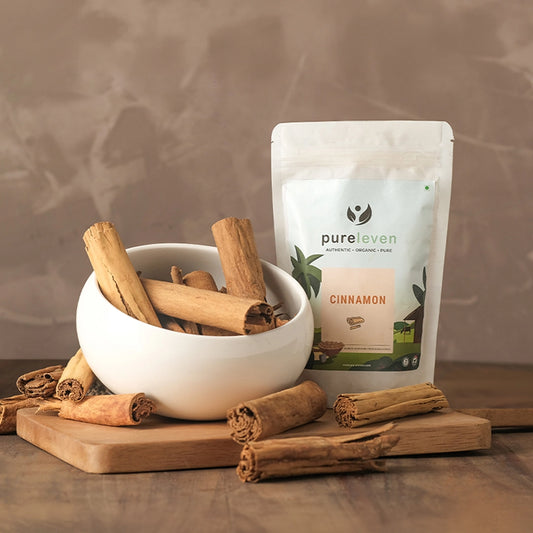 Primary pickTrue Ceylon Cinnamon (Dalchini) – Whole Quills from Sri LankaChoose between lighter Ceylon character and fuller cassia warmth with a cleaner conversion path.Rs. 250.00Rs. 190.00
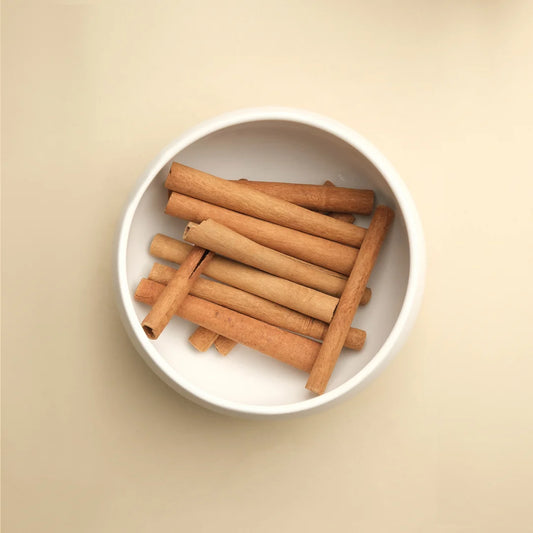 Also considerPremium Cassia Cinnamon Whole SticksRs. 159.50Rs. 120.00
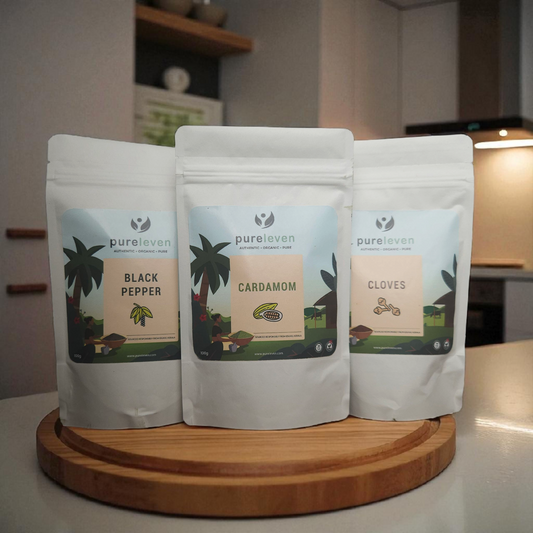 Kitchen add-on3-in-1 Kerala Spice ComboRs. 909.00Rs. 559.00


