



Pureleven journal
Cooking & Spices
From Kerala soil to your kitchen.
Kerala clove guide
Cloves for Toothache: Traditional Use and When to See a Dentist
Use the article as your buying bridge from clove education to stronger aroma and better pack selection.
Quick Summary
How cloves are traditionally used for toothache, why clove oil needs care and is never for children, and when to see a dentist.
Jump through the guide
Go straight to the sections that answer the buying, comparison, or sourcing question you came for.
Holding a clove against a sore tooth is a traditional home remedy, and some people find it takes the edge off the pain for a while. Cloves contain eugenol, which has a mild numbing effect, but a clove does nothing about the cause of toothache, so a dentist still needs to see it.
This is general information about a traditional practice, not medical or dental advice.
Why a clove can feel numbing
Cloves are rich in an aromatic oil, and most of that oil is a compound called eugenol. Eugenol has a long history in dentistry, and clove oil has traditionally been applied to painful teeth for temporary relief.
That said, the scientific evidence that eugenol reliably relieves dental pain is limited. Treat any relief as short-lived.
How cloves are traditionally used for toothache
- A whole clove is held gently between the sore tooth and the cheek, and softened by saliva. It isn't bitten hard or chewed on the painful side.
- A lightly crushed clove is held in the same way, to release a little more oil.
These traditional uses are for adults. Don't give young children whole cloves to hold in the mouth, as they're small and hard enough to be a choking risk.
Clove oil is a different thing
Clove oil is far more concentrated than a clove. Undiluted, it can irritate or burn the gums and the inside of the mouth. A few rules apply:
- Never use clove oil on children. Swallowed clove oil has caused serious poisoning, including liver damage, and children are most at risk. Keep bottles out of their reach.
- Never swallow it.
- Use only a pharmacy dental product if you want clove oil, and follow its label exactly.
- Check with a doctor or dentist first if you're pregnant, breastfeeding, have a bleeding disorder, take blood thinners, or have an operation coming up.
If someone swallows clove oil, get medical help straight away.
When to see a dentist
Toothache usually means something that needs treatment, such as decay, a cracked tooth, a gum problem or an infection. A clove won't fix any of these. The NHS advises seeing a dentist if:
- the pain lasts more than 2 days
- painkillers don't help
- you have a high temperature, or pain and swelling in your cheek or jaw
Get emergency help if swelling spreads to around the eye or the neck, or makes it hard to breathe, swallow or speak.
Common mistakes
- Using a clove to put off the dentist. Pain that fades can come back worse if an infection is left alone.
- Pouring neat clove oil on the gum. It can cause a chemical burn.
- Treating it as safe for everyone. Children, pregnant women and people on blood thinners need professional advice instead.
Cloves in the kitchen
Most cloves are bought for cooking, of course: biryani, garam masala, tea and plum cake. For the wider traditional uses of cloves, see our post on the uses of clove, and read about cloves from Adimali in Idukki. We sell whole Adimali cloves for the kitchen.
For ongoing tooth pain, please see a dentist.
Sources
Ready to buy?
Related products for this article
Move from reading intent to shopping intent with product cards tied to this topic and a direct route into the wider catalog.
 Primary pickKerala Adimali Clove Whole BudsKerala cloves selected for richer aroma, kitchen usefulness, and better value than commodity-grade alternatives.Rs. 200.00Rs. 140.00
Also considerKerala Adimali Clove Whole BudsRs. 200.00Rs. 140.00
Primary pickKerala Adimali Clove Whole BudsKerala cloves selected for richer aroma, kitchen usefulness, and better value than commodity-grade alternatives.Rs. 200.00Rs. 140.00
Also considerKerala Adimali Clove Whole BudsRs. 200.00Rs. 140.00
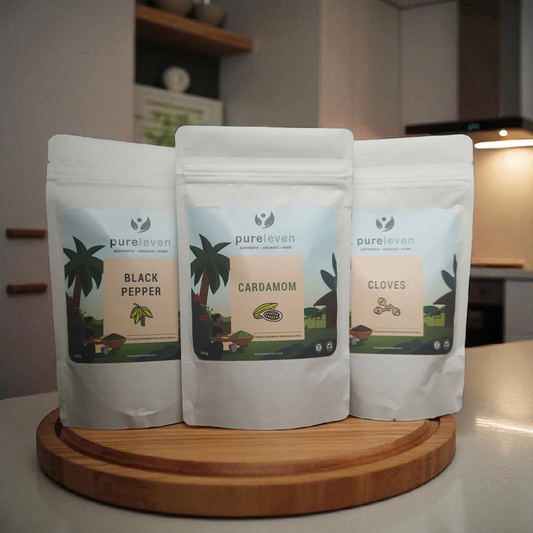 Kitchen add-on3-in-1 Kerala Spice ComboRs. 909.00Rs. 559.00


