



Pureleven journal
Cooking & Spices
From Kerala soil to your kitchen.
Kerala clove guide
Adimali Cloves: The Idukki Town Behind the Buds
Use the article as your buying bridge from clove education to stronger aroma and better pack selection.
Quick Summary
Adimali is a hill town in Idukki where cloves grow alongside pepper and cardamom. What makes the cloves from this area good, and how to spot quality buds.
Jump through the guide
Go straight to the sections that answer the buying, comparison, or sourcing question you came for.
Adimali cloves are whole clove buds grown around Adimali, a hill town in Idukki on the Kochi to Munnar road. The buds are picked by hand when they are fully formed and flushed pink, then dried in the sun. Good ones are dark reddish-brown, have round, intact heads and leave a little oil on your nail when pressed.
Where is Adimali, and why do cloves grow well there?
If you drive up from Kochi towards Munnar, Adimali is the busy town where the road starts climbing properly into the hills. Most travellers stop for tea and keep going. Around the town, on the slopes and in home gardens, clove trees grow alongside pepper vines, arecanut, coconut and cardamom.
The Spices Board describes the conditions clove prefers: high temperatures of around 25 to 35°C, plenty of sunlight, well-spread rainfall above 150 cm a year, and humidity above 70%. The mid-altitude slopes around Adimali fit that well.
Clove is a slow crop. A tree takes about seven years to start flowering and can keep producing buds for decades. That's one reason many Idukki farms keep a few clove trees as part of a mixed garden rather than planting them as a separate crop.
How are cloves harvested and dried?
- Picking. Clusters of buds are plucked by hand when the buds are fully developed and have a clear pink flush, before the flower opens.
- Separating. The buds are pulled off the stems. Stems are a lower-value by-product and shouldn't end up in a pack of whole cloves.
- Drying. The buds are spread out and dried in the sun over several days, until they turn dark brown and snap cleanly.
Timing matters most. Picked too late, the flower opens and the clove loses much of its oil and its neat shape. Picked too early, the bud is small and weak in smell.
How can you tell a good clove from a poor one?
- Intact head. The round ball at the top of the stem holds a lot of the aroma. A pack with many headless cloves has lost some of its flavour.
- Colour. Dark reddish-brown is what you want. Grey, dusty or very pale cloves are usually old or poorly dried.
- Oil. Press a clove hard with your fingernail. A good one leaves a slight oily mark and a strong, warm smell.
- Weight and shape. Good cloves look plump and feel heavy for their size. Shrunken, wrinkled, light cloves may be "exhausted", meaning some of their oil has already been removed.
- Clean pack. Few loose stems, no dust at the bottom, no musty smell.
Is there a simple test you can do at home?
Yes. FSSAI's DART guide (Detect Adulteration with Rapid Test) suggests a water test for exhausted cloves:
- Fill a glass with water.
- Drop in a small handful of cloves.
- Wait a minute. Genuine cloves settle at the bottom. Exhausted cloves float on the surface.
Treat it as a quick screen, not a lab result. One or two floaters in a large pack isn't a problem. If many float, and they also look shrunken and smell weak, that pack isn't worth the price.
How to store cloves so they stay strong
Whole cloves keep their oil well if they are kept dry. Store them in a clean glass jar with a tight lid, away from the stove and sunlight. Use a dry spoon. Damp hands in the jar can lead to mould in the monsoon.
Buy an amount you'll use in six months to a year. Cloves are strong, so most home kitchens need only a small pack.
How are cloves used in Kerala kitchens?
Two or three go into the ghee for biryani and neychoru. They are part of the whole-spice base for meat curries and roasts, go into sulaimani and masala chai, and are ground into the sweet spice mix for Kerala Christmas plum cake. A little goes a long way.
If you want to read about how cloves have traditionally been used beyond cooking, see our post on clove uses and benefits.
Our Adimali cloves come from farms around Adimali and are packed whole, so you can run the checks above yourself.
Sources
Ready to buy?
Related products for this article
Move from reading intent to shopping intent with product cards tied to this topic and a direct route into the wider catalog.
 Primary pickKerala Adimali Clove Whole BudsKerala cloves selected for richer aroma, kitchen usefulness, and better value than commodity-grade alternatives.Rs. 200.00Rs. 140.00
Also considerKerala Adimali Clove Whole BudsRs. 200.00Rs. 140.00
Primary pickKerala Adimali Clove Whole BudsKerala cloves selected for richer aroma, kitchen usefulness, and better value than commodity-grade alternatives.Rs. 200.00Rs. 140.00
Also considerKerala Adimali Clove Whole BudsRs. 200.00Rs. 140.00
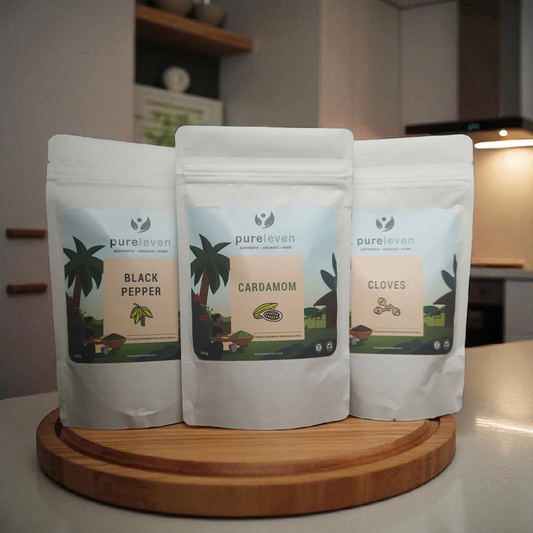 Kitchen add-on3-in-1 Kerala Spice ComboRs. 909.00Rs. 559.00


