



Pureleven journal
Cooking & Spices
From Kerala soil to your kitchen.
Pureleven spice journal
Kumily Spice Shops: A Buyer's Guide
Answer-first guidance with a faster path to farm-origin Kerala products you can buy today.
Quick Summary
Kumily's main road is lined with spice shops. How to tell a good one from a tourist trap, fair checks for cardamom and pepper, and what locals actually buy.
Jump through the guide
Go straight to the sections that answer the buying, comparison, or sourcing question you came for.
Kumily, the town next to Thekkady, has a spice shop every few steps on its main road. Some have sold to the same families for decades, some exist mainly for tour buses, and telling them apart takes a few minutes, not a lot of expertise, once you know what to check.
Signs of a shop worth buying from
- They let you see and smell the cardamom and pepper before you buy. They don't only hand over sealed packs.
- They can tell you the grade of the cardamom (its size in mm) and roughly where it's from.
- Prices are shown clearly, per 100 g or per kg, not negotiated from nothing.
- Whole spices are the main stock, not mostly powders, oils and souvenirs.
- Locals shop there too. If you see people from the town buying, that's usually a good sign.
Signs to walk away from
- Pressure to buy large quantities for a "special price" that only lasts while you're standing there.
- Very cheap saffron. It isn't grown in this part of Kerala.
- Cardamom that's unusually bright, uniform green. Real pods vary in colour. Overly bright can mean added colour.
- Staff who can't answer basic questions about what they're selling you.
- Big health claims printed on oils and powders.
Quick checks you can do in the shop
Cardamom
Crack a pod open. The seeds should be black, slightly sticky, and smell strong immediately, without you having to crush them. Pods should be plump and closed, with a natural, slightly uneven green.
Black pepper
Pick up a handful. It should feel heavy in your palm. Bite one corn: it should be hot and fragrant, not hollow or crumbly.
Cloves
Look for intact round heads rather than bare stems, and press one with a nail. It should leave a little oil behind.
What people from the area actually buy
Mostly cardamom, pepper and tea, in amounts they'll get through in a few months. Gift boxes and flavoured powders are more of a tourist thing. It's a sensible pattern to copy, wherever you're buying from.
Once you're home
Keep everything in airtight jars away from the stove, and when the tin runs low, you don't need another trip to Kumily to refill it. We ship Idukki cardamom, black pepper and Adimali cloves from Rajakumari across India. For more ways to judge what's in front of you, our spice quality checklist covers the rest.
Frequently asked questions
Is it okay to just look around without buying?
Yes, a shop worth its name won't mind. If a shopkeeper gets pushy the moment you walk in without buying, that's worth noting on its own.
Should I bargain on the price?
Some room to negotiate is normal in a tourist town, but if the first price drops by half the moment you hesitate, the shop was never selling at a fair price to begin with.
Are vacuum-packed spices from these shops better than loose ones?
Packing style says less than you'd think. A vacuum pack keeps air out, which helps, but it can't fix pepper that was poor to start with. Judge the spice first, the packaging second.
Ready to buy?
Related products for this article
Move from reading intent to shopping intent with product cards tied to this topic and a direct route into the wider catalog.
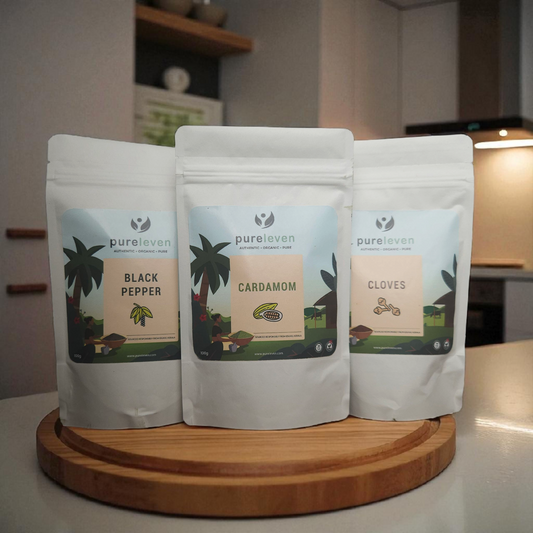 Primary pick3-in-1 Kerala Spice ComboStart with a best-selling Pureleven product picked to match the buying intent behind this article.Rs. 909.00Rs. 559.00
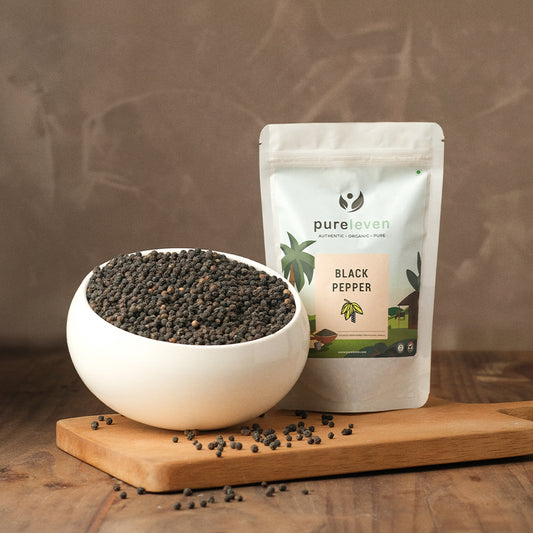 Also considerKerala Black Pepper (Kali Mirch) – Bold Whole Peppercorns from IdukkiRs. 100.00
 Kitchen add-onExtra Bold Kerala Cardamom (Elaichi) – 8mm Whole Pods from IdukkiRs. 309.00Rs. 270.00


